

Persona & Segmentation Strategy
Building a Customer-Centric Framework at PMI

Project Overview
Client: Project Management Institute (PMI)
Project Type: UX Research & Audience Strategy, Digital Transformation, Service Design, Change Management
Timeline: 9 months (completed May 2023)
My Role: Lead CX Strategist, working with cross-functional teams including research, data science, and marketing
This project transformed PMI's approach to customer understanding, moving from static, fictional personas to a dynamic, data-informed audience framework. Success came from balancing rigor (data science, research) with accessibility (simplified profiles, clear guidance), while establishing a governance model that ensured long-term sustainability.
Through cross-functional leadership and sophisticated data integration, we built a customer intelligence capability that enabled PMI to make more empathetic, effective decisions and prioritize investments based on genuine insights rather than assumptions—highlighting my ability to transform abstract customer understanding into concrete, actionable business systems.
The Ask
Develop a unified, data-informed audience framework that would align PMI's understanding of customers across the entire organization, enabling more customer-centric decision-making and prioritization of investments.
Background
PMI had accumulated over 100 disconnected personas across the organization, creating confusion about who they served and hindering strategic focus. These personas were largely fictional and not tied to customer data, making them difficult to measure, target, or prioritize effectively.


Approach
Discovery & Analysis
We began by auditing the existing 100+ personas and segmentation models across the organization. Working with the data science team, we identified critical gaps between qualitative research and customer data. This highlighted a significant opportunity to create a connected ecosystem of customer understanding.
Framework Development
We developed a comprehensive two-part framework:
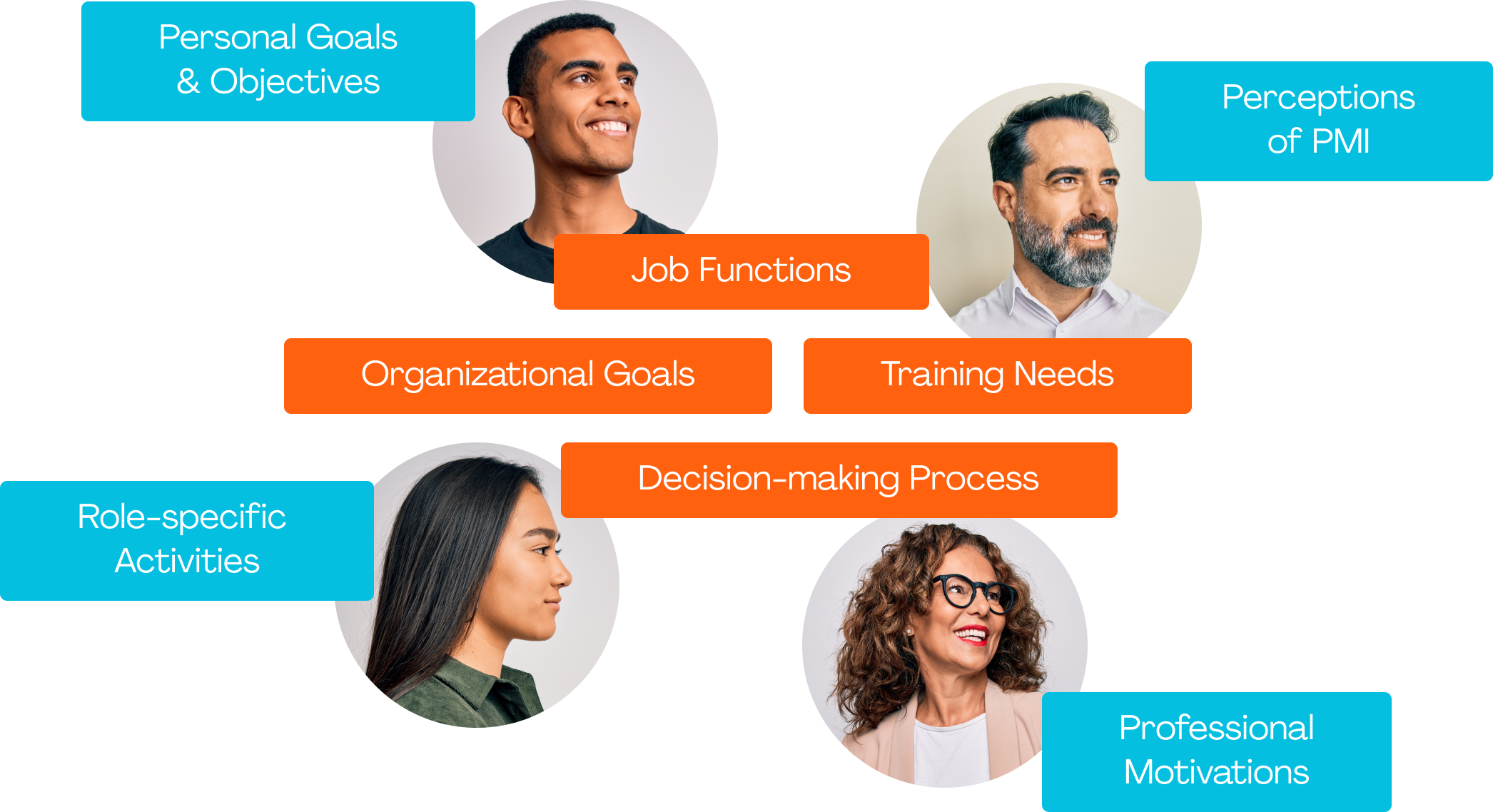
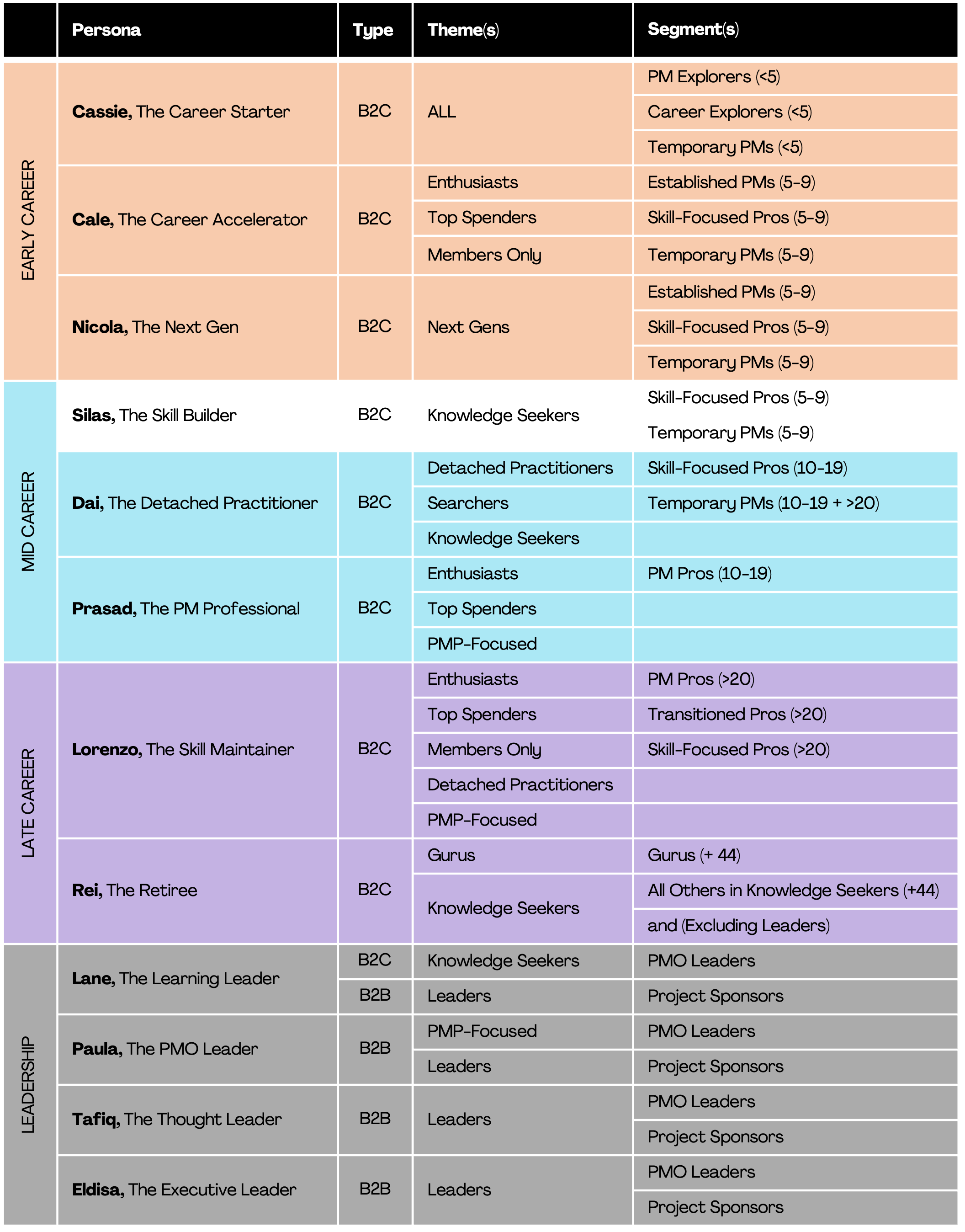
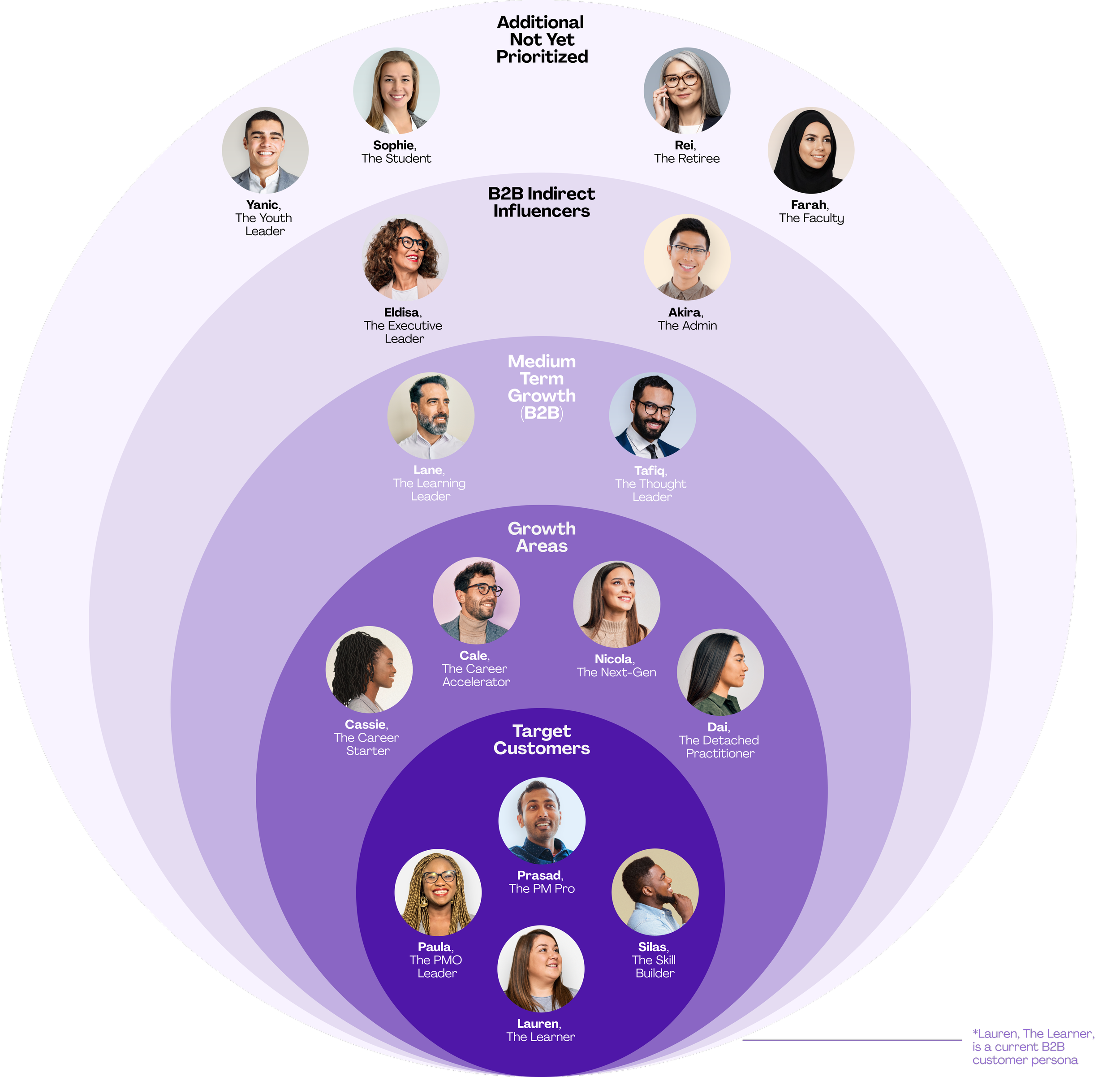
Front Stage: Simplified, focused audience profiles representing core and growth segments
Back Stage: Data-driven segmentation model using machine learning to identify patterns in customer behavior
This approach uniquely connected qualitative insights with quantitative data, creating a framework greater than the sum of its parts.
Audience Prioritization Model
I supported the development of a robust scoring model to evaluate and prioritize audiences based on:
Business metrics (customer count, total spend, CLV)
Engagement data (web activity, certification status)
Strategic growth potential
This enabled PMI to make data-informed decisions about resource allocation and focus.
Cross-Functional Governance
To ensure adoption, we established a cross-functional governance model with representatives from Marketing, Product, Digital Experience, CX, Strategy, and Data Science. This collaborative approach gained critical buy-in from stakeholders across the organization.

Implementation
We created a three-phase implementation plan:
Knowledge Base & Tools: Launched CX Hub intranet site with audience profiles and downloadable resources
Experience Transformation: Mapping complete customer journeys across the career lifecycle to identify friction points and opportunities
Systems Integration: Working to align audience data across platforms
The project has since evolved into an ongoing capability, with regular updates based on new research and data insights.
Impact
“ Really great job on the segmentation and persona work. …already this is a huge achievement that will have massive benefit across PMI. Today's response [across the] teams was very positive. And to think, your first big project is going straight to the Board! Well done and I'm excited to see what's next! “
– Gregory Reynolds, VP of Customer Experience
Business
Strategic Clarity: Reduced 100+ personas to a focused set of core and growth audiences
Investment Prioritization: Created data-driven method for evaluating segment value and potential
Operational Efficiency: Eliminated duplicate research and enabled coordinated efforts
Customer Experience
Short-term: Created a foundation for more empathetic interactions by understanding customer context and motivations
Medium-term: Enabled personalized experiences across touchpoints
Long-term: Built capability for predictive, proactive customer engagement
Cultural
Shifted the organization from inside-out to outside-in thinking
Democratized customer understanding across all departments
Established common language for discussing customer needs